Fish health issue Parasite 🟠 High risk

ichthyobodo necator fish health guidance for clubs & fisheries

Ichthyobodo necator (Costia) is a rapidly spreading parasite that attacks a fish’s skin and gills. It causes lethargy, breathing problems, weight loss, and can be deadly—especially for young or stressed fish. It thrives in both cold and warm water, so good management and low-stress conditions are essential to prevent outbreaks.

Supports EA reporting decisions Practical steps for bailiffs & coaches Junior-friendly explanations
Signs & symptoms Actions to take Reporting

Category

Parasite

Helps you quickly understand whether this is a parasite, viral issue, water quality problem or wider management topic.

Severity

🟠 High risk

Use alongside EA guidance and your own fishery rules to decide next steps.

Notifiable?

No – but still monitor closely

Always follow the latest EA advice on notifiable fish diseases.

Linked species

23 species

Used to surface this guidance directly inside the Clubnest Species Guide.

Scroll down for full guidance, reporting advice and linked species for this condition.
Spot issues early, act quickly
Ichthyobodo necator
Fish health guidance for Carp ( F1 Hybrid ), Barbel, Bleak, Bream ( Common ), Bream ( Silver ), Bream ( White ), Chub, Carp ( Common ), Carp ( Crucian ), Carp ( Mirror ), Carp ( Grass ), Carp ( Leather ), Eel, Perch, Pike, Roach, Rudd ( Common ), Rudd ( Golden ), Tench ( Green ), Tench ( Golden ), Brown Trout, Rainbow Trout, Goldfish & Koi Carp. 🟠 High risk

About this condition

Ichthyobodo necator (Costia) is a rapidly spreading parasite that attacks a fish’s skin and gills. It causes lethargy, breathing problems, weight loss, and can be deadly—especially for young or stressed fish. It thrives in both cold and warm water, so good management and low-stress conditions are essential to prevent outbreaks.

What is Ichthyobodo necator?

Ichthyobodo necator (often called Costia) is a tiny, single-celled parasite that lives on the skin and gills of freshwater fish. You can’t see it without a microscope. It has two little thread-like “tails” called flagella, which help it swim.

It can survive in both warm and cold water and multiplies very quickly, especially when fish are stressed.

When Ichthyobodo infects fish, it causes a disease called ichthyobodosis.

What does it do to fish?

This parasite damages both the skin and the gills. Fish infected with Ichthyobodo may:

  • Lose weight and condition
  • Become very tired and slow
  • Produce lots of mucus
  • Struggle to breathe
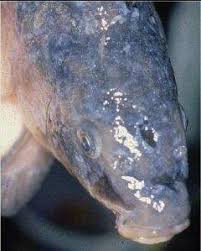
  • Show patchy, greyish skin
  • Die suddenly in severe cases

Inside the gills, the parasite causes cell damage and swelling. This reduces the fish’s ability to breathe properly. In bad outbreaks, the gills can fill with fluid or become misshapen, making the fish unable to control water movement through its body.

Young fish and overwintering fish are the most at risk.

Why is it so dangerous?

  • Fish can die from even light infections
  • The parasite multiplies very quickly
  • Outbreaks happen in both cold winters and warming spring temperatures
  • Stressed or overcrowded fish are extremely vulnerable
  • There is no practical treatment for lakes and ponds

Ichthyobodo is a major cause of winter and early spring fish losses.

How do we reduce the risk?

There is no effective fishery-wide chemical treatment.
 Good fishery management is the key:

✔️ Reduce stress

Avoid overcrowding, poor water quality, and sudden handling.

✔️ Stock fish carefully

Fish are very vulnerable during spring and early summer when water warms up.

✔️ Keep stock densities sensible

Too many fish → rapid spread.

✔️ Monitor water quality

Regular checks for oxygen, ammonia, and temperature help spot early problems.


Report Fish Disease or Pollution

If you suspect this condition, see unusual fish behaviour, or witness a pollution incident at your waters, you must contact the Environment Agency immediately. Quick reporting protects your fishery and prevents further fish mortalities.

EA Incident Hotline

0800 80 70 60

24 hours · Free to call

Report an Incident

Modern Tools for Angling Clubs

Clubnest helps angling clubs manage memberships, tickets, coaching, junior sections, safeguarding, fishery information and fish health guidance — all in one place.

  • Species guide + health issues
  • Junior coaching tools
  • Membership & ticketing
  • Venue and fishery management
Get Started with Clubnest