Grayling species guide Game fish Easy (4/10)

Grayling junior fishing guide

Thymallus thymallus

A clear, plain-English guide to grayling for parents, coaches and juniors. See where they live, the best starter tackle, simple bait choices and a three-step plan to help young anglers catch their first one safely.

Junior-first & welfare-aware 3-step beginner plan UK venues & seasons
Skill & size Seasons Beginner baits

Skill level

Easy (4/10)

Great for coached juniors and confident beginners.

Best time

Spring–Autumn

Pick mild, settled days for junior sessions.

Typical size

8–12 oz common; specimens over 2 lb possible.

Always match hooks, nets & lines to expected fish size.

🐟

Beginner baits

Caster, Lobworm, Pinkie …

Keep it simple — small hook baits, little-and-often feeding.

Typical venues: Clean, cool rivers with gravel beds and steady flow.
Scroll down for detailed tackle setups, methods and parent-friendly guidance.
Catch your first grayling with confidence

Catch your first Grayling in 3 steps

A simple, repeatable plan juniors can follow with help from a parent, coach or older angler.

  1. Step 1

    Choose safe winter grayling beats

    Grayling are ideal for winter coaching on clean, steady glides with good access. Avoid flooded or very fast water when taking juniors.

  2. Step 2

    Float or fly with fine gear

    Fish trotting rigs with maggots or small nymphs on fine hooklengths, or use simple upstream nymphing where juniors can manage short, controlled casts.

  3. Step 3

    Practice careful release in cold water

    Grayling are delicate in low temperatures. Show juniors how to keep them in the net, unhook quickly and support them upright in the flow until they kick away.

Tackle setups that work

Designed with juniors and fish welfare in mind. Start with an IDEAL or GOOD setup for easier casting and safe unhooking.

👉 Swipe sideways to view different setups.

Fly Rod

Beginner tip: Focus on smooth casting and gentle lifting strikes, keep false casts to a minimum and always wear eye protection.

IDEAL

Rod: Fly rod rated to the correct line weight for the species and venue.

Reel: Matching fly reel with enough backing for the line weight.

Line: Tapered leader of 5–8 lb for trout and 8–12 lb for larger game fish.

Terminal tackle

  • ["Selection of flies"
  • "tippet ring or loop to loop connection"
  • "barbless or debarbed hooks"]

Extras

  • ["Polarised glasses"
  • "landing net"
  • "wading staff and belt if wading"]

Fly rod setup matched to line and leader for trout, grayling and other game fish.

Ultra-Light Lure Rod

Beginner tip: Stress local byelaws and seasons – many game fish must be returned carefully and some are protected.

GOOD

Rod: 6–7 ft ultra-light spinning rod (2–10 g).

Reel: 1000–2000 size fixed spool reel.

Line: 4–6 lb mono or braid with 4–6 lb fluorocarbon leader.

Terminal tackle

  • ["Barbless hooks where required"
  • "Appropriate local patterns or small spinners"]

Extras

  • ["Polarised glasses"
  • "Priest where legal"
  • "Rubber mesh landing net"]

Game fish like trout and grayling are usually targeted with fly tackle or light spinning gear.

About the Grayling

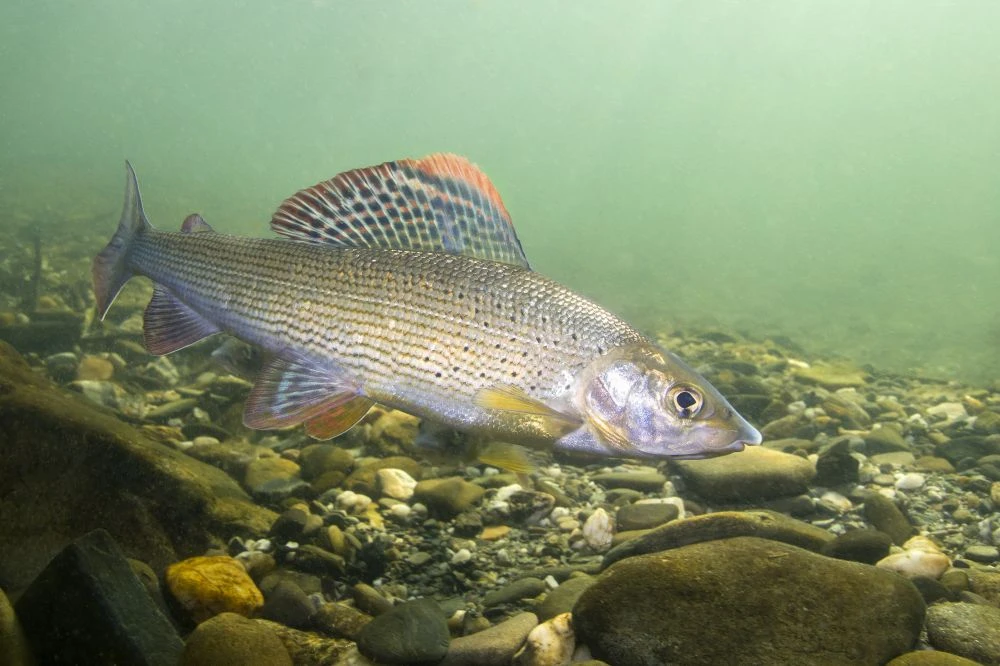
Grayling are elegant, silver game fish with a tall, colourful dorsal fin and a faint smell of thyme. They shoal in glides and are superb targets for trotting or light nymph fishing.

Junior tip

On suitable rivers, try trotting maggots or fishing small nymphs under a float with a guide. Grayling give fast, fluttering bites and great sport on light tackle.

Logged a Grayling recently?

Add a catch report so juniors can see where they’re being caught, which baits work and how your tackle was set up.

Want to discover more species? Browse the full species guide.