Fish health issue Parasite 🟠 High risk

Argulus mongolianus fish health guidance for clubs & fisheries

Argulus mongolianus is a newly discovered fish louse recently found in the UK. It attaches mainly to the gills, mouth, and head of fish, causing irritation, stress, and sometimes deaths. It has already been confirmed in carp, roach, and bream, and may infect all freshwater species. Because it is new and potentially harmful, reporting any suspicious lice or fish behaviour is very important.

Supports EA reporting decisions Practical steps for bailiffs & coaches Junior-friendly explanations
Signs & symptoms Actions to take Reporting

Category

Parasite

Helps you quickly understand whether this is a parasite, viral issue, water quality problem or wider management topic.

Severity

🟠 High risk

Use alongside EA guidance and your own fishery rules to decide next steps.

Notifiable?

No – but still monitor closely

Always follow the latest EA advice on notifiable fish diseases.

Linked species

22 species

Used to surface this guidance directly inside the Clubnest Species Guide.

Scroll down for full guidance, reporting advice and linked species for this condition.
Spot issues early, act quickly
Argulus mongolianus
Fish health guidance for Carp ( F1 Hybrid ), Barbel, Bream ( Common ), Bream ( Silver ), Bream ( White ), Chub, Carp ( Common ), Carp ( Crucian ), Carp ( Mirror ), Carp ( Grass ), Carp ( Leather ), Eel, Perch, Pike, Roach, Rudd ( Common ), Rudd ( Golden ), Tench ( Green ), Tench ( Golden ), Zander, Brown Trout, Rainbow Trout. 🟠 High risk

About this condition

Argulus mongolianus is a newly discovered fish louse recently found in the UK. It attaches mainly to the gills, mouth, and head of fish, causing irritation, stress, and sometimes deaths. It has already been confirmed in carp, roach, and bream, and may infect all freshwater species. Because it is new and potentially harmful, reporting any suspicious lice or fish behaviour is very important.

What is Argulus mongolianus?

Argulus mongolianus is a newly discovered type of fish louse — a small crustacean parasite that attaches to fish. It was recently found in the UK for the first time, and only very few studies exist on it worldwide.

Unlike normal Argulus (which usually attach to the skin), this species prefers the gills, mouth, and head of the fish, which can make infections more serious.

Why is it a concern?

This parasite:

  • Feeds on the fish’s blood and skin
  • Can cause irritation, stress, and tissue damage
  • May lead to loss of appetite, weakness, and in some cases, fish deaths
  • Spreads easily if fish or water are moved between lakes
  • Can infect many different freshwater species, not just carp

Because it is new in the UK, experts don’t yet know how harmful or widespread it might become.

What does Argulus mongolianus look like?

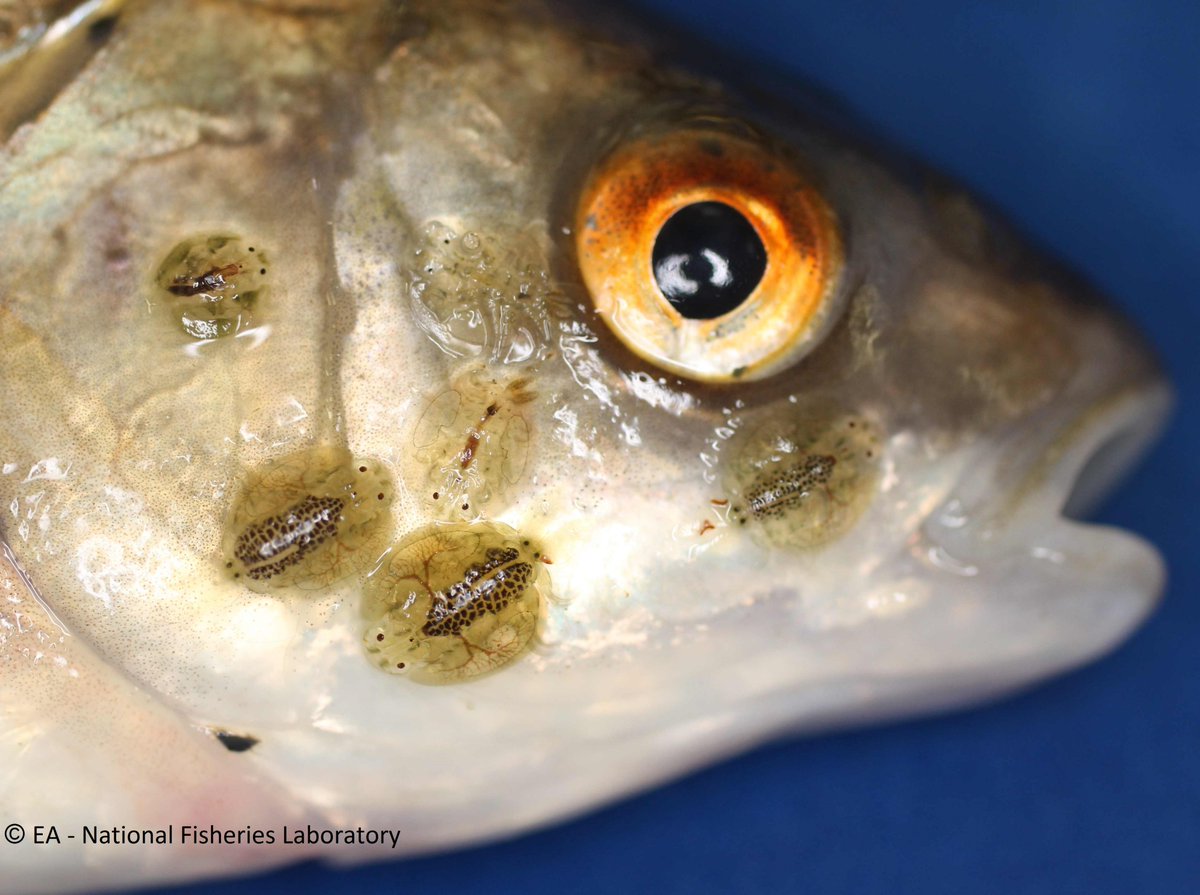
Fish lice are small, flat, disc-like creatures that move on the fish’s body.
 However, you cannot identify this species by eye — only lab specialists can confirm it.

Signs to look for:

  • Fish lice around the gills, mouth or head
  • Fish rubbing against surfaces (flashing)
  • Lethargy or poor condition
  • Visible distress

Female parasites may appear larger and filled with eggs.

What is being done?

The Environment Agency has:

  • Placed movement controls on infected fisheries
  • Started monitoring its spread across UK waters
  • Begun working with experts in the UK and Asia to understand the parasite
  • Encouraged anglers and fishery managers to report anything suspicious

If you find Argulus on a fish, it can often be gently removed and sent for lab identification.


Report Fish Disease or Pollution

If you suspect this condition, see unusual fish behaviour, or witness a pollution incident at your waters, you must contact the Environment Agency immediately. Quick reporting protects your fishery and prevents further fish mortalities.

EA Incident Hotline

0800 80 70 60

24 hours · Free to call

Report an Incident

Modern Tools for Angling Clubs

Clubnest helps angling clubs manage memberships, tickets, coaching, junior sections, safeguarding, fishery information and fish health guidance — all in one place.

  • Species guide + health issues
  • Junior coaching tools
  • Membership & ticketing
  • Venue and fishery management
Get Started with Clubnest