Arctic Char species guide Game fish Moderate (6/10)

Arctic Char junior fishing guide

Salvelinus alpinus

A clear, plain-English guide to arctic char for parents, coaches and juniors. See where they live, the best starter tackle, simple bait choices and a three-step plan to help young anglers catch their first one safely.

Junior-first & welfare-aware 3-step beginner plan UK venues & seasons
Skill & size Seasons Beginner baits

Skill level

Moderate (6/10)

Best with some experience or support from a coach.

Best time

Spring–Autumn

Pick mild, settled days for junior sessions.

Typical size

Varies by venue

Always match hooks, nets & lines to expected fish size.

Arctic Char

Beginner baits

Caster, Lobworm, Pinkie …

Keep it simple — small hook baits, little-and-often feeding.

Typical venues: Prefers cold, well-oxygenated waters and can be found at depth during summer but comes closer to shore in cooler months.
Scroll down for detailed tackle setups, methods and parent-friendly guidance.
Catch your first arctic char with confidence

Catch your first Arctic Char in 3 steps

A simple, repeatable plan juniors can follow with help from a parent, coach or older angler.

  1. Step 1

    Respect sensitive upland waters

    Arctic Char inhabit fragile, cold lakes and rivers. Any junior involvement should be part of carefully controlled, conservation-aware fishing with local guidance.

  2. Step 2

    Use light game tackle with barbless hooks

    Float, spinner or fly tactics must be scaled to protect small, deep-bodied fish. Strong enough gear avoids prolonged fights, and barbless hooks make release easier.

  3. Step 3

    Focus on education, not numbers

    Use Char mainly to teach juniors about glacial lakes, cold-water species and habitat care. Keep handling minimal and follow any mandatory catch-and-release rules.

Tackle setups that work

Designed with juniors and fish welfare in mind. Start with an IDEAL or GOOD setup for easier casting and safe unhooking.

👉 Swipe sideways to view different setups.

Fly Rod

Beginner tip: Fish early morning or evening; keep presentation fine

IDEAL

Rod: 9–10 ft #6–7 fly rod

Reel: Trout fly reel

Line: 5–6 lb fluorocarbon leader

Terminal tackle

  • ["Nymphs"
  • "small streamers"]

Extras

  • ["Polarised glasses"
  • "Landing Net"]

Fly rod setup matched to line and leader for trout, grayling and other game fish.

Spinning Rod

Beginner tip: Retrieve slowly near depth changes

GOOD

Rod: 7–9 ft light spinning rod

Reel: 2500 reel

Line: 6–8 lb mono/braid

Terminal tackle

  • ["Small spoons"
  • "Mepps"]

Extras

  • ["Trace"
  • "barbless hooks"
  • "Landing Net"]

General spinning rod setup for lures and small spinners for perch, pike, chub and some sea species.

Ultra-Light Lure Rod

Beginner tip: Stress local byelaws and seasons – many game fish must be returned carefully and some are protected.

GOOD

Rod: 6–7 ft ultra-light spinning rod (2–10 g).

Reel: 1000–2000 size fixed spool reel.

Line: 4–6 lb mono or braid with 4–6 lb fluorocarbon leader.

Terminal tackle

  • ["Barbless hooks where required"
  • "Appropriate local patterns or small spinners"]

Extras

  • ["Polarised glasses"
  • "Priest where legal"
  • "Rubber mesh landing net"]

Game fish like trout and grayling are usually targeted with fly tackle or light spinning gear.

About the Arctic Char

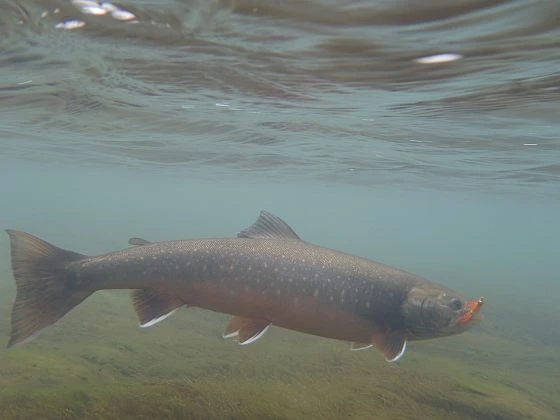
The Arctic Char is one of Britain’s most beautiful and mysterious game fish, belonging to the salmon family. It thrives in cold, deep, clear lakes where few other species can survive. With its silvery body and pink to orange belly, it looks like a cross between a brown trout and a salmon, and in spawning colours can turn vivid red with white-edged fins. 

Char are mainly found in the Scottish Highlands, Lake District, and a few upland lakes in Wales and Ireland, making them one of the UK’s rarest native fish. Some populations remain in freshwater all their lives, while others migrate to the sea and return like salmon. 

They are powerful, fast-swimming predators that feed on insects, shrimps, and small fish, especially during the colder months. In summer they stay deep, where the water is cooler and well-oxygenated, and are best fished for early or late in the day when they rise to feed. 

Because Arctic Char only thrive in the cleanest, coldest waters, they are a vital indicator of water quality and climate health. Many lakes protect them under conservation laws, and anglers are encouraged to practise catch-and-release to help safeguard remaining populations. 

Junior tip

Arctic Char are sensitive to disturbance and temperature. Fish early morning or evening with light gear and fine presentation.
Focus on deep, clear lakes and slow retrieves with natural-coloured flies or lures.

Logged a Arctic Char recently?

Add a catch report so juniors can see where they’re being caught, which baits work and how your tackle was set up.

Want to discover more species? Browse the full species guide.