About this condition
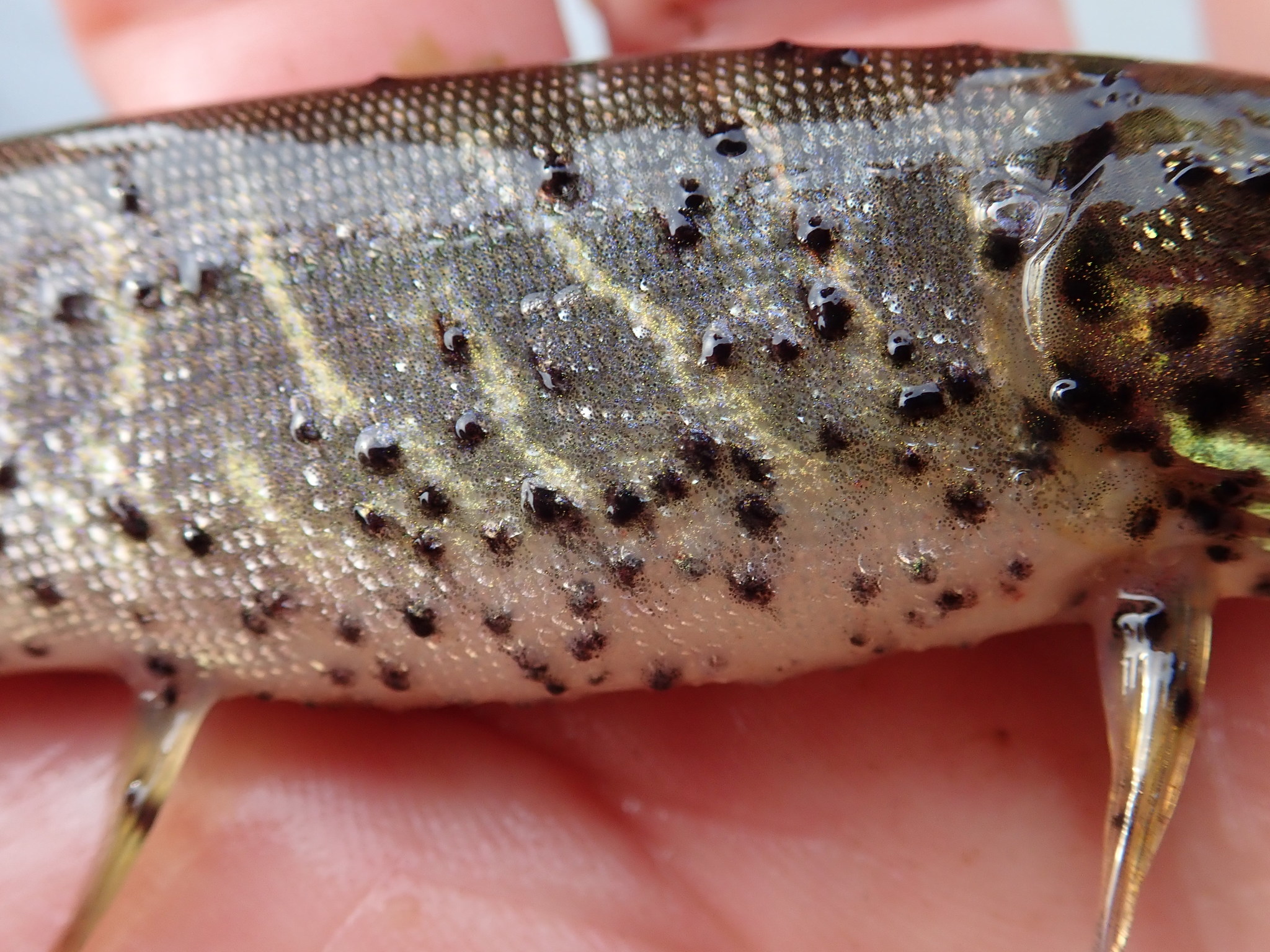
Blackspot is a common parasite that forms tiny black cysts on the skin and fins of freshwater fish. It looks alarming but is normally harmless and part of a natural cycle involving snails and birds. Only very heavy infections or small fish are affected. In most cases, blackspot is nothing to worry about.
What is Blackspot?
Blackspot is a parasite that forms tiny black cysts on the skin, fins, and gills of freshwater fish. The dark colour comes from a pigment the fish produces around the parasite — not from the parasite itself. You can see blackspot with the naked eye.
The parasite is a type of flatworm that has a very complicated life cycle involving snails, fish, and fish-eating birds like herons.
What does Blackspot do to fish?
Not very much!
The parasite burrows into the fish’s skin and forms a small cyst, but it doesn’t feed on the fish’s tissue and rarely causes harm.
Blackspot:
- Is usually cosmetic only
- Does not normally affect swimming or feeding
- Is only problematic when very large numbers are present
- Can make small fish more noticeable to predators
Most fish with blackspot live completely normal lives.
The Life Cycle (Simple Version for Juniors)
The parasite has three hosts:
- Birds (like herons)
- Adult parasite lives in the bird’s gut
- Eggs are released into the water
- Snails
- Eggs infect aquatic snails
- New larval stages develop inside the snail
- Fish
- The larvae leave the snail and burrow into a fish
- The fish’s skin forms a black cyst around them
- When a bird eats the fish — the cycle repeats
This is a normal part of nature and happens in lakes all over the world.
Is Blackspot harmful?
Most of the time, no.
- Light infections are harmless
- Heavy infections can affect small or young fish
- Seeing blackspot can actually be a good sign, because it means the habitat supports snails — a key part of a healthy food chain
Blackspot is one of the easiest parasites to spot, but usually nothing to worry about unless fish are covered in large clusters of cysts.