About this condition
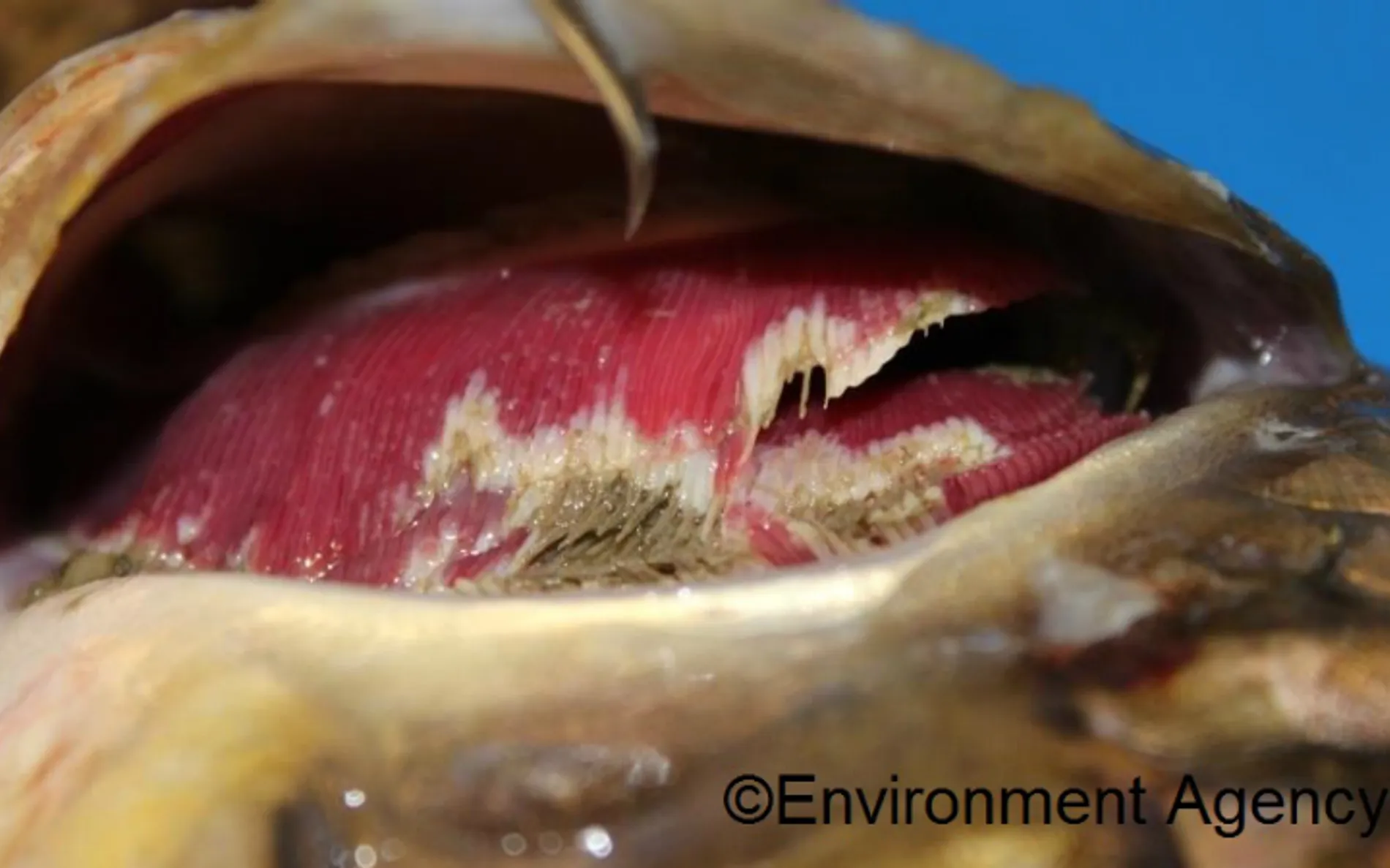
Koi Herpesvirus (KHV) is a serious virus that infects only carp and can cause large-scale deaths, especially in warm water. It leads to severe gill damage, breathing problems and “sleepy”, weak behaviour. The virus spreads easily on fish, nets, and water, and must be confirmed by laboratory testing. KHV is a Notifiable Disease and must be reported immediately.
What is KHV?
Koi Herpesvirus (KHV) is a serious virus that infects carp only. This includes wild carp, mirror carp, koi carp, and ghost carp. It first appeared in the late 1990s and has since become one of the biggest health threats to carp all over the world.
KHV is now widespread in England and causes big losses in fisheries, especially during the warmer months.
What does KHV do to carp?
Carp infected with KHV may show:
- Lethargy (very slow or tired behaviour)
- Breathing problems
- Hanging around the surface or margins
- Erratic swimming
- Severe gill damage (dead patches, missing tissue)
- Sunken eyes
- Skin colour changes
Because the gills are so badly affected, the carp struggle to get enough oxygen, especially in warm water.
KHV often appears alongside fungal, bacterial, or parasitic infections because the fish’s immune system becomes weak.
What triggers KHV outbreaks?
Two things trigger KHV:
🔥 Warm water
KHV becomes active at:
- 16°C – 29°C
Outbreaks usually happen in late spring and summer.
⚠️ Stress
Carp are more vulnerable when:
- Stock levels are too high
- Water quality is poor
- There is overcrowding
- Fish are handled or moved often
- Recent stocking has taken place
Even if the virus is already present in a lake, it might not cause problems until fish become stressed or temperatures rise.
How does KHV spread?
KHV spreads extremely easily through:
- Infected fish (even if they look healthy)
- Nets, mats, slings and boots
- Tackle that is still wet
- Contaminated water
- Fish movements between fisheries
Good biosecurity is essential to prevent outbreaks.
How is KHV confirmed?
KHV cannot be confirmed by looking at a fish.
Only a laboratory test can confirm the virus.
Many things look similar to KHV (poor water quality, parasites, algae blooms), so proper testing is needed for every outbreak.
Is KHV a controlled disease?
Yes.
KHV is a Notifiable Disease under UK law.
Any suspicion must be reported to the Fish Health Inspectorate (FHI).
Movement restrictions may be put in place to stop the virus spreading.
What happens if KHV is found in your fishery?
If confirmed:
- Movement restrictions may be applied
- Biosecurity rules will be enforced
- You will receive guidance on protecting your fishery
- Management actions (lower stock density, better water quality) can reduce future risk
Most outbreaks happen because of environmental triggers — meaning better management can greatly reduce the chance of it happening again.