About this condition
Gyrodactylus sprostonae is a newly recognised gill fluke causing major carp deaths in the UK. It reproduces extremely quickly, attaches to the gills, and can cause severe breathing problems and mortality. It mainly affects carp and crucians and is considered a serious emerging parasite. Good fishery management and quick reporting are essential.
What is Gyrodactylus sprostonae?
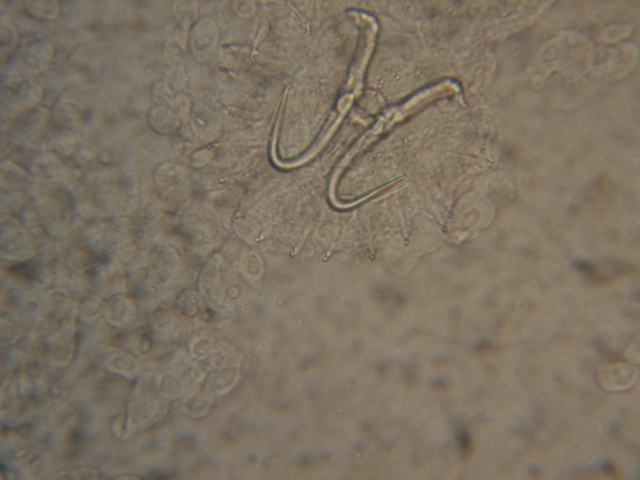
Gyrodactylus sprostonae is a tiny parasitic worm called a gill fluke. You can’t see it with the naked eye because it's less than 0.5mm long. It attaches to a fish’s gills using special hooks and then feeds on the surface cells.
Most flukes cause only minor irritation — but this particular species is very different and much more dangerous.
It has recently caused major carp deaths in the UK, including big specimen fish in well-run fisheries.
Why is it dangerous?
Unlike normal flukes, this species builds up extremely quickly because:
- It gives birth to live young
- Each newborn already contains another juvenile inside it
- It can reproduce daily in warm conditions
- It does not need any other animals to complete its life cycle
This means infections can explode in days.
Some fish examined by the National Fisheries Laboratory had over 100,000 flukes on their gills.
What does the parasite do to fish?
- Attaches to the gills and feeds on cells
- Causes high mucus production
- Destroys normal gill structure
- Creates pale or damaged areas
- Makes breathing very difficult
- Leads to lethargy, poor condition, and eventually death
Because the gills are so vital, large infections quickly overwhelm even healthy fish.
How is it detected?
You cannot see this parasite on the fish.
Detection requires:
- Detailed microscopic examination of the gills
- Identification of the parasite’s hook shape, which is unique
This is why formal laboratory investigation is needed during mortalities.
Life Cycle (Junior Friendly)
- The parasite lives its entire life on the fish
- It gives birth to live babies that stay attached to the same gill
- Each baby already contains a developing parasite inside it
- Warm water speeds up the birth rate dramatically
This allows huge populations to build very quickly.
Why are some species so damaging?
Most flukes don’t cause big problems because healthy fish can control them.
But when:
- A new parasite species enters a fishery
- Fish are overcrowded
- Water quality is poor
- Fish are stressed
…then the balance breaks, and the parasite population can explode.
A famous example is Gyrodactylus salaris, which devastated Norway’s salmon populations.
This is why G. sprostonae is being taken so seriously in the UK.
How do we manage the risk?
Good fishery management is essential:
✔ Keep stock density sensible
✔ Maintain high water quality
✔ Monitor fish health regularly
✔ Ensure fish health checks before stocking
✔ Follow strict biosecurity procedures
Fisheries, the Environment Agency, and laboratories are monitoring this parasite closely.