Fish health issue Virus 🟠 High risk ⚠️ Notifiable disease

Carp Edema Virus fish health guidance for clubs & fisheries

Carp Edema Virus (CEV) is a serious viral disease that affects carp, causing extreme tiredness (“sleepy carp”) and severe gill damage. It has caused sudden carp deaths in the UK and can appear in both warm and very cold temperatures. Only carp species are affected. Any signs of sleepy or dying carp should be reported immediately.

Supports EA reporting decisions Practical steps for bailiffs & coaches Junior-friendly explanations
Signs & symptoms Actions to take Reporting

Category

Virus

Helps you quickly understand whether this is a parasite, viral issue, water quality problem or wider management topic.

Severity

🟠 High risk

Use alongside EA guidance and your own fishery rules to decide next steps.

Notifiable?

Yes – EA must be informed

Always follow the latest EA advice on notifiable fish diseases.

Linked species

2 species

Used to surface this guidance directly inside the Clubnest Species Guide.

Scroll down for full guidance, reporting advice and linked species for this condition.
Spot issues early, act quickly
Carp Edema Virus
Fish health guidance for Carp ( Common ), Carp ( Mirror ). 🟠 High risk
⚠️

Notifiable fish disease

If you suspect this condition in wild or stocked fish, contact the Environment Agency incident hotline immediately. Do not move fish, stock new fish, or carry out works that could spread disease.

About this condition

Carp Edema Virus (CEV) is a serious viral disease that affects carp, causing extreme tiredness (“sleepy carp”) and severe gill damage. It has caused sudden carp deaths in the UK and can appear in both warm and very cold temperatures. Only carp species are affected. Any signs of sleepy or dying carp should be reported immediately.

What is CEV?

Carp Edema Virus, or CEV, is a virus that affects carp. It causes a condition often called Koi Sleepy Disease, because infected fish become extremely slow, weak, and often gather near the edges of the lake.

CEV was first found in UK carp in 2012 after several sudden fish deaths. Since then, more cases have appeared, and work is being done to understand how common the virus is and how it spreads.

What does CEV do to carp?

Carp with CEV often show:

  • Lethargy (very slow, sleepy movement)
  • Hanging around the margins
  • Not responding to anglers or disturbance
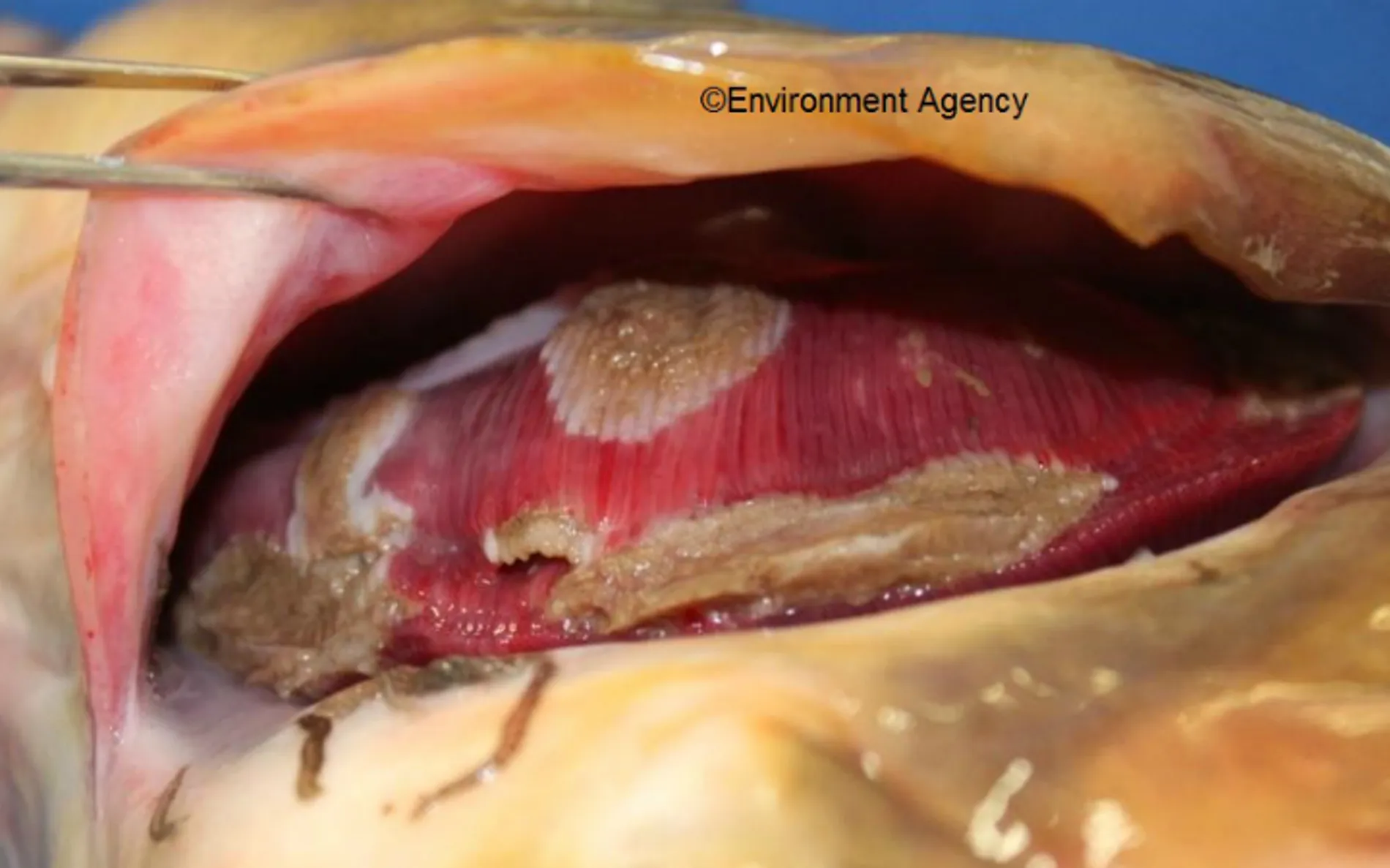
  • Severe gill damage, including swelling, clubbing and patches of dead tissue

The gill damage makes it hard for carp to breathe, especially when water quality is poor. Some infected fish also show internal organ stress or inflammation.

Because these signs can look similar to other illnesses or poor water quality, proper investigation is important.

When does the virus appear?

In Japan, CEV outbreaks mostly happen in spring and summer (15–23°C).
But in the UK, CEV has appeared in very cold water too — even at 3°C.

This means the virus might cause problems at any time of year, making it harder to predict.

How do we manage it?

As soon as CEV is suspected:

  • Fish movements are restricted
  • A full investigation (lab testing + water quality checks) is carried out
  • The aim is to prevent spreading the virus to other fisheries

There is no treatment, so protecting other waters and improving conditions for the fish is vital.


Report Fish Disease or Pollution

If you suspect this condition, see unusual fish behaviour, or witness a pollution incident at your waters, you must contact the Environment Agency immediately. Quick reporting protects your fishery and prevents further fish mortalities.

EA Incident Hotline

0800 80 70 60

24 hours · Free to call

Report an Incident

Modern Tools for Angling Clubs

Clubnest helps angling clubs manage memberships, tickets, coaching, junior sections, safeguarding, fishery information and fish health guidance — all in one place.

  • Species guide + health issues
  • Junior coaching tools
  • Membership & ticketing
  • Venue and fishery management
Get Started with Clubnest