About this condition
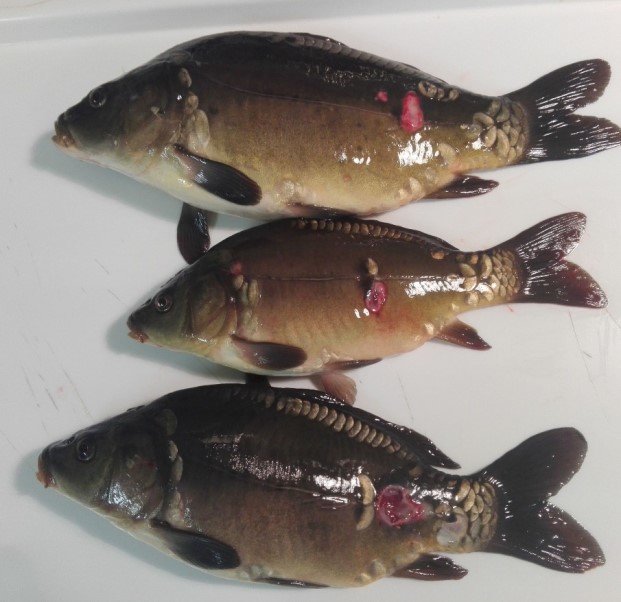
Aeromonas is one of the most common bacterial infections in UK coarse fisheries. An opportunistic pathogen, it typically strikes fish already weakened by stress, poor water quality, or physical injury. Outbreaks are most common during warm weather and after handling.
What is Aeromonas Infection?
Aeromonas is a genus of naturally occurring gram-negative bacteria found in freshwater environments across the UK. The most common species affecting coarse fish are Aeromonas hydrophila and Aeromonas sobria. Under normal conditions these bacteria are largely harmless — problems arise when fish become stressed or immunocompromised, allowing opportunistic infection to take hold.
Aeromonas is one of the most frequently diagnosed bacterial conditions in UK stillwaters and rivers, and is a leading cause of ulcer disease in carp and other coarse species.
Signs & Symptoms
Fish managers and anglers should look out for:
- Open ulcers or sores — often red-edged, appearing on the flanks, back, or near the base of fins
- Fin rot — fraying or erosion of the dorsal, tail, or pectoral fins
- Haemorrhaging — reddening at the base of fins or around the mouth
- Dropsy — swollen abdomen with raised, pinecone-like scales (indicates systemic infection)
- Pop-eye (exophthalmia) — one or both eyes protruding from the socket
- Lethargy — fish hanging near the surface or in margins, slow to respond
- Loss of appetite — fish failing to feed during normal feeding periods
- Abnormal swimming — listing, rolling, or erratic movement in advanced cases
Not all symptoms will be present simultaneously. Early-stage infections may show only minor ulceration before deteriorating rapidly if untreated.
Causes & Risk Factors
Aeromonas is almost always opportunistic — healthy, unstressed fish in good water conditions rarely develop serious infections. The following increase risk significantly:
- Poor water quality — low dissolved oxygen, high ammonia or nitrite, elevated turbidity
- High water temperatures — bacterial activity increases markedly above 15°C; outbreaks peak in summer
- Overcrowding — stress from high stocking densities suppresses immune response
- Handling and transport — scale and mucus damage during netting, weighing, or stocking creates entry points for infection
- Physical injury — spawning damage, predator strikes, or hook injuries that aren't cleaned
- Pre-existing disease — fish weakened by parasitic infection (e.g. anchor worm, fish lice) are at higher risk
- Seasonal transitions — spring warming and autumn cooling are common trigger periods
What to Do If You Suspect Aeromonas
For fishery managers:
- Remove and isolate any visibly infected fish if facilities allow
- Test water quality immediately — dissolved oxygen, ammonia, nitrite, pH, and temperature
- Reduce feeding if water quality is compromised
- Increase aeration if dissolved oxygen is low
- Avoid unnecessary netting or disturbance of the stock while an outbreak is active
- Contact a qualified fish health specialist or vet for diagnosis and treatment options — prescription antibiotics may be appropriate in severe cases
- Review stocking density and recent management activity for contributing factors
- Keep a written record of symptoms, fish affected, water test results, and any treatment applied
For anglers:
- If you catch a fish with open ulcers or other visible symptoms, handle it as little as possible
- Wet your hands before handling
- Return the fish carefully and report the issue to the fishery manager immediately
- Do not move fish between waters
- Ensure all equipment is thoroughly dried or disinfected between venues to avoid cross-contamination
Treatment
Aeromonas cannot be treated by anglers directly. Fishery-level responses include:
- Water quality correction — the single most effective intervention; improving conditions removes the primary stressor
- Topical treatment — antimicrobial wound treatments applied directly to ulcers under veterinary guidance
- Antibiotic treatment — in serious outbreaks, a vet may prescribe medicated feed; this requires a valid prescription and should not be attempted without professional diagnosis
- Salt bath — sometimes used as a short-term supportive measure to reduce osmotic stress and inhibit secondary infection
Early intervention significantly improves outcomes. Fisheries that address water quality and reduce stocking stress typically see natural recovery without the need for medication.
Prevention
- Maintain consistent water quality monitoring throughout the season, particularly in warm weather
- Avoid overstocking — follow recommended stocking densities for the venue size and type
- Handle fish carefully during matches, stocking events, and management operations
- Quarantine new fish before introduction to an existing water
- Treat any visible physical injuries during handling (e.g. anchor worm removal sites) with appropriate wound treatment
- Keep nets, slings, and equipment clean and dry between sessions
Is Aeromonas Notifiable?
No. Aeromonas infection is not a notifiable disease under the Fish Health Regulations 2009 (as amended) in England and Wales. You are not legally required to report it to the Environment Agency or Fish Health Inspectorate, though contacting a fish health specialist is strongly recommended in significant outbreaks.
If you are unsure whether a disease is notifiable, contact the Fish Health Inspectorate at the Centre for Environment, Fisheries and Aquaculture Science (CEFAS): [email protected]